The season’s winding down, and if you’re like most of the athletes I coach, you’re ready for a break. Take it. You earned it.
Here’s where it goes wrong: walking away completely for four, six, eight weeks. Cold turkey feels like rest. It isn’t free. A 2022 study in the European Journal of Sport Science found meaningful drops in cardiorespiratory and muscular fitness in endurance athletes after just two weeks of complete training cessation — not months, weeks. What you built over a season doesn’t survive an off switch.
The other extreme is just as bad. Staying locked into structured, race-specific training all winter means you show up to next season’s build already worn down, with nothing left to spend.
The off-season isn’t “no training.” It’s different training, aimed at four things:
1. Recovery. Actual recovery, not a lighter version of the same plan. Reduced volume, more sleep, less structure, permission to miss a day without it meaning anything. This is what lets the fitness you built all season actually consolidate, instead of just holding on by a thread. But that window has an edge — the detraining research above is the reason “a few weeks” and “a few months” are not the same thing.
2. Strength. Real gym work, aimed at what 2027 is going to ask of you: durability, power, resilience to injury. A well-known study in Medicine & Science in Sports & Exercise had distance runners add heavy, low-rep strength work (think near-max half-squats) alongside their normal training for eight weeks. Running economy improved by roughly 5%, with no drop in VO2max and no added bulk. That’s a real edge, and the off-season, when you’re not trying to run fast on tired legs, is the best window to build it.
3. Base. Easy aerobic volume, no structure, no pressure. Just time on feet, on the bike, in the water, keeping the engine warm. Research on elite endurance athletes across sports, running, cycling, rowing, cross-country skiing, consistently shows they spend somewhere around 80% of their training time at low, conversational effort and only about 20% at moderate-to-hard. The off-season is where that low-end base gets built without a race pulling you into the red to do it.
4. Technique and weaknesses. This is the one nobody wants to do and everyone benefits from. The stuff you’ve worked around all season: the hip that never quite fires, the catch in your swim stroke, the pacing discipline that falls apart late in a race. Research comparing runners of similar fitness has found that a real chunk of the difference in running economy comes down to technique, not just physiology. Off-season is the only time you can slow down enough to actually fix something and let it become automatic, before race pace asks you to hold it under fatigue.
That’s the plan for the next several weeks: not maintaining what you did this year, but building the foundation for 2027.
Which is where I want to hear from you. Everyone’s 2027 goals look different: a first ultra, a faster century, getting back to racing after time off, or just building a body that can keep saying yes to adventure. Your off-season should be built around your specific goal, not a generic template.
If you want to map out what that actually looks like for you — strength split, recovery windows, base volume, and the technique work worth fixing now, send me a note or grab time on my calendar here: Contact Me
A few weeks ago I watched an athlete’s heart rate climb ten beats per minute on a climb she’d run a dozen times before, at a pace that felt, in her words, “exactly the same as always.” Her watch said she was working harder. Her legs said otherwise. Her watch was wrong.
That gap — between what your metrics say and what your body is actually telling you — is the whole reason I build every training plan around Rate of Perceived Exertion first, and heart rate, power, and pace second.
Not instead of them. Alongside them. But in the right order, because each of these tools is only honest under certain conditions, and none of them was built to run the whole show.
Heart rate: honest in the lab, unreliable everywhere else
Heart rate zone training came out of controlled lab tests in the 1970s and 80s — steady conditions, steady temperature, steady terrain. It’s a great tool in that exact environment. The problem is that almost none of you train in that environment.
Your heart rate isn’t just responding to your pace. It’s responding to your total stress load — and that includes things that have nothing to do with fitness:
Heat. Your body diverts blood to your skin to cool you off, so your heart rate climbs at the same pace and same effort, just because it’s 85°F instead of 60°F.
Elevation. Above about 5,000 feet, there’s less oxygen pressure in the air, so your heart works harder for the same output — before you’ve done anything differently.
Hydration and caffeine. Both push heart rate up independent of effort.
Cardiac drift. On a long ride or run, your heart rate climbs over time even when your effort hasn’t changed — partly rising core temperature, partly accumulating fatigue. If you chase a fixed heart rate number on a long day, cardiac drift will quietly talk you into slowing down when you don’t actually need to.
Fatigue, going the other direction. A genuinely tired athlete’s heart rate response gets blunted — it climbs more slowly and tops out lower, which can trick you into thinking you’re not working hard when you’re actually cooked.
None of that means heart rate is useless. Your resting heart rate and your recovery heart rate — measured the same way, under similar conditions — are genuinely useful signals for how well you’re absorbing training. I still have athletes track both. I just don’t build a workout around hitting a heart rate number when the conditions that day make that number meaningless.
Power: excellent on a bike, still catching up everywhere else
This is where discipline matters most, so let me be direct instead of vague: if you’re on the bike, your power meter is one of the best tools available, full stop. Cycling is a closed mechanical system — the road or trainer doesn’t change shape under you the way trail does. A watt is a watt whether you’re fresh or fried, uphill or down, once you account for grade. I use power on the bike constantly, especially for structured intervals and pacing long rides.
Running power is a different story — not because the idea is bad, but because the technology isn’t there yet. Running power meters don’t actually measure force directly; they estimate it from your motion and back-calculate what it would take to produce that speed. That estimate holds up fine on a flat road or a familiar loop of consistent trail. It falls apart the moment the surface changes — pavement to sand, hardpack to loose scree, a technical descent versus a smooth fire road. For anyone training across mixed or technical terrain, which is most of you, running power is a data point to note, not a number to chase.
And in the water — there’s no meaningful power metric at all. Feel is genuinely the only real-time tool you have.
Pace: only honest on a track
Pace tells you what you did. It doesn’t tell you how hard it was to do it. A 9-minute mile on fresh legs, flat pavement, cool morning air is not the same event as a 9-minute mile at hour six of a long trail day, climbing, in the heat. Same number on your watch, completely different physiological reality.
Pace is still worth tracking — it’s how you measure progress over time on comparable terrain, and it’s useful for pacing strategy on a course you know well. But treated as the primary intensity signal, it actively misleads you the second the terrain, weather, or fatigue level changes. Which, if you’re training for adventure instead of a treadmill, is most of the time.
RPE: the only tool that’s actually watching all of it at once
Rate of Perceived Exertion is nothing fancier than a 1–10 scale of how hard something feels, developed by a Swedish researcher named Gunnar Borg back in the 1960s. It sounds almost too simple to trust. Here’s why it works better than it sounds like it should: it’s the only measurement that integrates cardiovascular strain, muscular fatigue, and whatever the day itself is throwing at you — heat, altitude, bad sleep, a stressful week at work — into a single real-time number. Heart rate, power, and pace each capture a slice of that picture. RPE captures the whole thing, because it’s coming from the one sensor that’s actually experiencing everything at once: you.
The catch is that RPE is subjective — my 6 might be your 8. That’s exactly why I don’t just hand an athlete a scale and hope for the best. I calibrate it, using something borrowed straight from exercise science called the Talk Test:
Comfortable — you can talk in full sentences without effort. That’s roughly RPE 1–4.
Labored — you can still talk, but only a sentence at a time before you need to catch your breath. That’s your threshold zone, RPE 5–7.
Uncomfortable — you can barely speak at all. RPE 8–10.
Do that a few times across different efforts and I have a real, personal read on how you interpret hard — not a generic chart that assumes everyone feels intensity the same way.
How this actually shows up in your training plan
In practice, it looks like this:
On the bike — power is my primary number for structured work, RPE confirms it still feels right on the day.
On technical trail, in heat, or at altitude — RPE leads, heart rate is a secondary note, pace is context, not a target.
In the water — RPE, essentially by default. There’s nothing else reliable to lean on. But coach, you chased the clock for decades in the pool. Yes I did. But we’re endurance athletes, we’re not chasing hundredths of a second here, we’re chasing hours. I’m not knocking master’s swim programs, they’re great. But we’re not training for a 200 fly at master’s nationals.
On race day, especially anything with real climbing — I build pacing strategy RPE-first: figure out the effort you can sustain on the hardest climb, then hold everything else one to two points below that. That’s a more honest pacing plan than a flat heart rate or pace target that falls apart the moment the course tilts uphill.
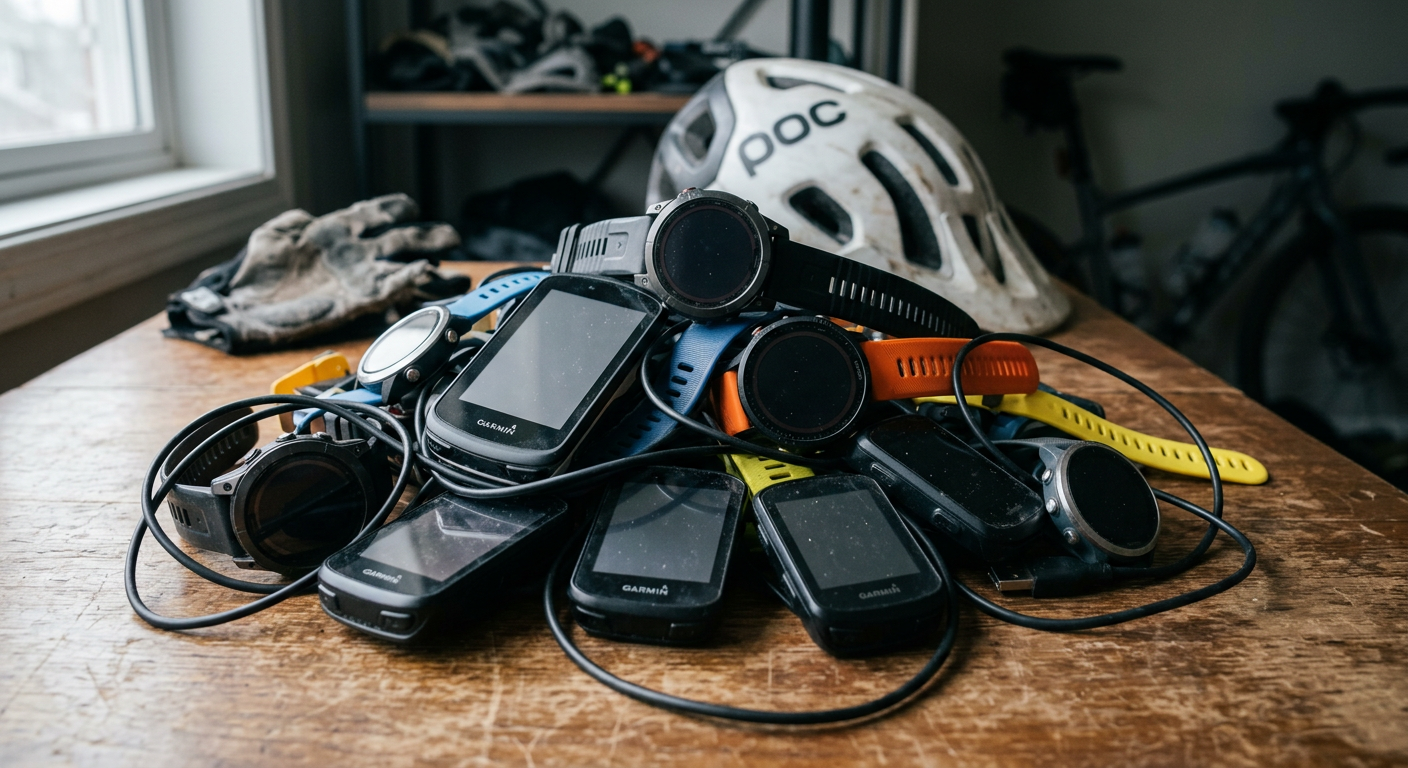
None of this means throw away your devices. It means using them for what they’re actually good at, and not asking a heart rate monitor to do a job it was never built for. Data should inform your training. It shouldn’t be the verdict on how your day went — your body already knows that, if you’re paying attention to it.
Want help building a training plan that actually reads your effort instead of arguing with your watch?
Hit reply and tell me what you’re training for — or if you’re on Instagram, DM me RPE and I’ll walk you through exactly how I’d calibrate it for you.
There is a version of endurance training that looks great on paper.
Every workout completed. Every interval hit. Every long session done exactly as written. No interruptions. No fatigue. No schedule conflicts. No life.
And for most adventure-driven athletes, that version does not exist.
Good.
Because the athletes I work with are not trying to build fitness in a vacuum. They are building it inside full lives. Careers. Families. Travel. Stress. Weather. Limited time. Shifting energy. Real responsibilities.
That does not make you inconsistent. That makes you human.
The problem is that too many athletes still judge themselves by a standard that was never built for the life they actually live. They miss one workout, shift a long ride, shorten a run, or swap a session because their body or schedule says something different than the plan.
And then the spiral starts.
They feel behind. They feel like they are losing momentum. They start questioning the whole week. Sometimes they stop trusting themselves altogether.
But missed perfection is not missed progress.
Fitness is not built because one Tuesday workout was flawless. It is built through the steady accumulation of work over time. The big picture matters more than the isolated blips. One adjusted workout does not ruin your season. One messy week does not erase your base. One pivot does not mean you lack discipline.
In fact, for many athletes, learning how to adjust well is one of the most important skills they can build.
That is what imperfect training really is.
It is not laziness. It is not softness. It is not lowering the bar.
It is knowing how to stay pointed in the right direction even when the week does not go to plan.
Sometimes imperfect training means shortening the workout and still showing up. Sometimes it means moving the key session and letting the rest go. Sometimes it means taking the easy day easier than your ego wants. Sometimes it means getting outside for two hours instead of forcing the exact numbers indoors. Sometimes it means understanding that the best session for today is the one your life can actually support.
That is not failure. That is maturity.
Adventure-driven endurance athletes need a different standard.
Not “Did I execute every detail perfectly?” But: Did I keep moving forward? Did I make a smart decision? Did I protect the rhythm of training inside real life?
Because that rhythm is what keeps you in the game.
The goal is not to become the athlete who never has disruption. The goal is to become the athlete who knows how to navigate it.
That is where coaching actually matters.
Not in building some fantasy version of your life where nothing ever shifts. But in helping you remove decision fatigue, adapt without guilt, and keep training in a way that supports both performance and the rest of your life.
You do not need more pressure. You do not need a plan that punishes you for being busy. You do not need to earn progress by executing perfectly.
You need a framework that works in the life you actually have.
That is the case for imperfect training.
Not less commitment. Not less intention. Just a better way to stay in motion.
Have you ever come across that meme featuring Kobe Bryant’s 10 rules for success? It seems to pop up in my social media feeds just when I need a dose of inspiration. Kobe, a legendary figure in basketball, was not only an athlete but also … Continue reading Unlock Greatness: Kobe Bryant’s 10 Rules for Achieving Success
Forget everything you think you know about recovery. The window matters. And frankly, most athletes are squandering it. While many competitors obsess over their workout performance—the intensity, the volume, the sweat-drenched achievement—they catastrophically overlook what happens next. The post-exercise period, that critical 2-to-24-hour window following … Continue reading Optimize Your Recovery: Nutrition Timing for Athletes
As we approach the final months of 2025, it’s time to reflect on your journey and set the stage for an incredible 2026. Your future self—the one who has big scary goals and will hit new milestones—will thank you for the work you put in … Continue reading Unlock Your Endurance Potential This Off-Season
What is swimrun? A couple of years ago I came across a bizarre race while surfing the interwebs. It was created by a few crazy Swedes and involved running in your wetsuit and swimming in your shoes traversing from island to island in beautiful local. … Continue reading Swimrun comes to America: Casco Bay Swimrun