What is swimrun?
A couple of years ago I came across a bizarre race while surfing the interwebs. It was created by a few crazy Swedes and involved running in your wetsuit and swimming in your shoes traversing from island to island in beautiful local. You had to compete with a partner, and the distance covered a mind boggling 65 km of trail running and 10 km of open water swimming across 26 islands in the Baltic Sea. As described on the official website (http://otilloswimrun.com/):
“Swimrun is the sport that was born from a drunken bet. In 2011 it got the name from Erika Rosenbaum, one of our ÖTILLÖ Swimrun World Championship podium finishers. It is a team-sport based on two persons travelling through nature and time, completely dependent of each other.
The team alternates between running and swimming along a pre-marked course in nature; it can be between islands or between lakes. As a team you race within 10 metres of each other, you share the experience, the fun, the beauty and the suffering. Swimrun is emotion!”
Here’s a highlight real from last year’s world championship race:
Seriously, just take my money. Where do I sign up? Oh wait, I need a partner. Someone as crazy as me. While this sport is growing, it is doing so mostly in Europe. There are now ten or so races across the continent, but swimrun hadn’t yet made it across the Atlantic to North America. That is until now. USA Swimrun was coming and Casco Bay, Maine was going to be the location. As soon as I saw the coverage on Slowtwitch.com I knew I had to be in this race. The lottery was opening up and teams were going to be drawn by early February. I needed a partner. I reached out through my old swimming contacts, the 2k+ members of the DC Tri Club, and well everyone on Facebook. I found one taker. One dude ready to tackle this extreme adventure with me. We submitted the required proof of swim times and entered the lottery, vice submitting a merit application and waited. On 05 February I received an email from Jeff Cole, one of the race directors, the lottery winners and merit selections had been posted – we were in!
How does one swimrun?
Now I had to start training. Ok, I’ve been training for IM Wisconsin all along, but there were a few new things I had to try out. The first was trail running in wet shoes.
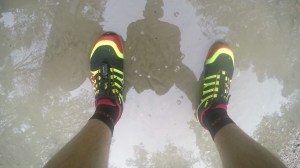
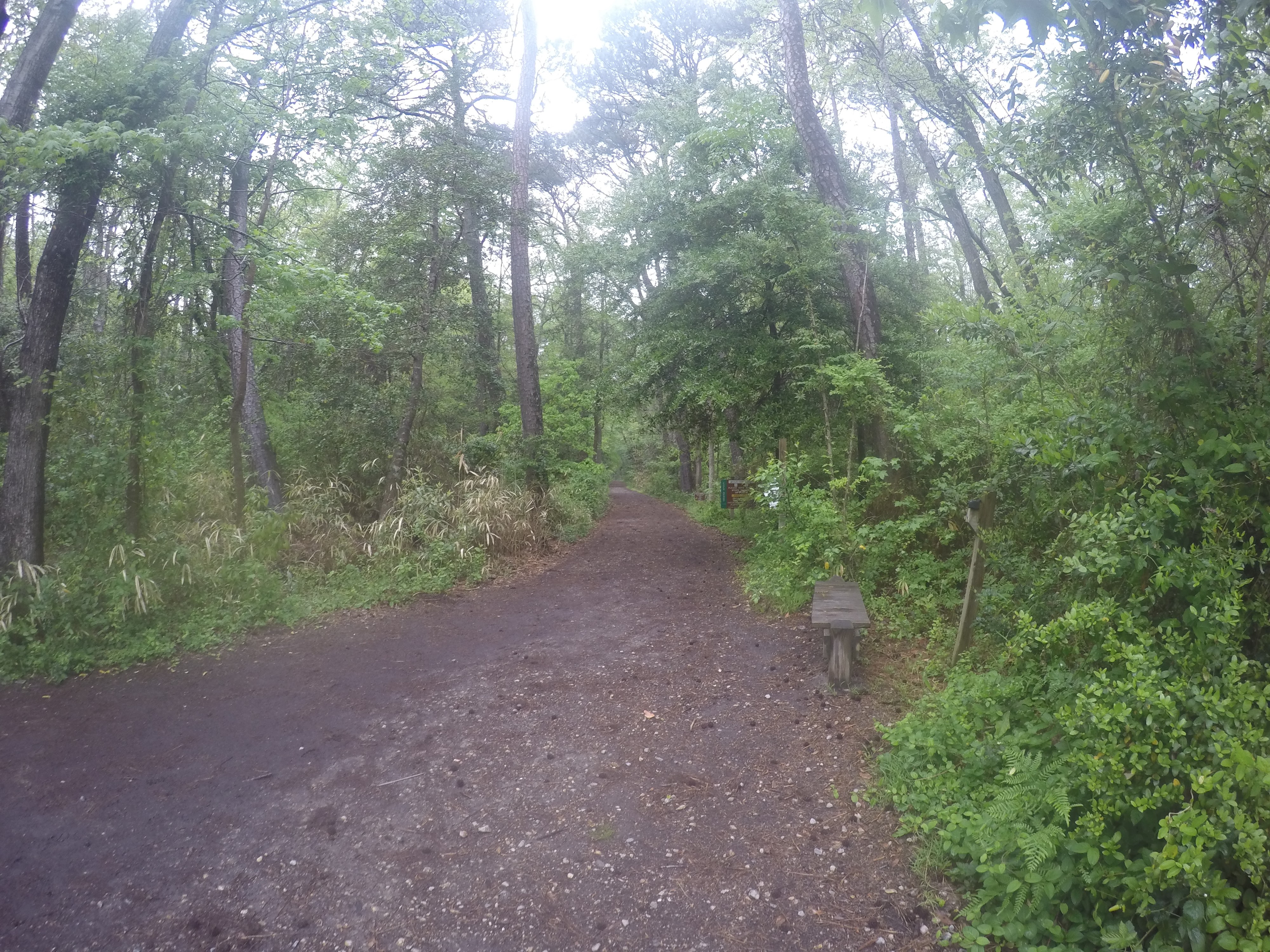
When the opportunity presented itself, I added swimming with paddles and shoes to my training. I got numerous curious comments when I showed up to the local open water swim practices with shoes, paddles and a pull buoy, but this race wouldn’t be like lap swimming.
Along the way I had to acquire a few more race specific items.
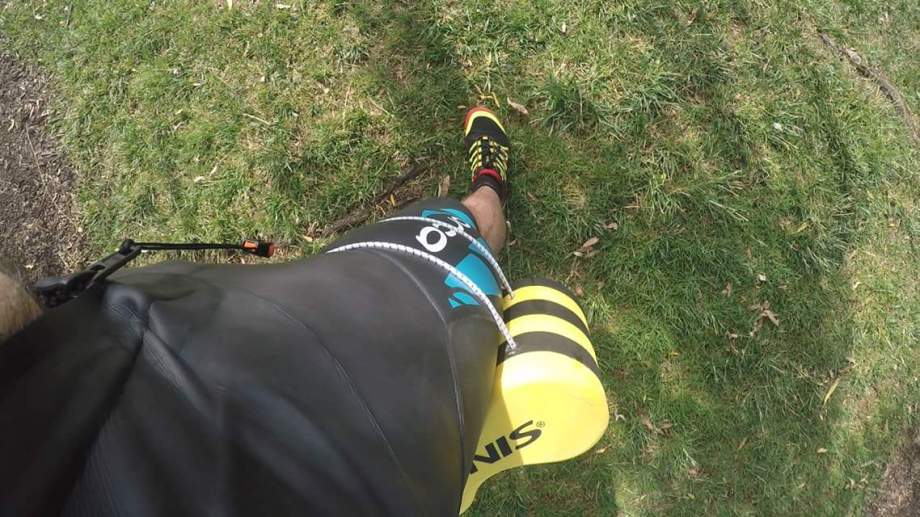
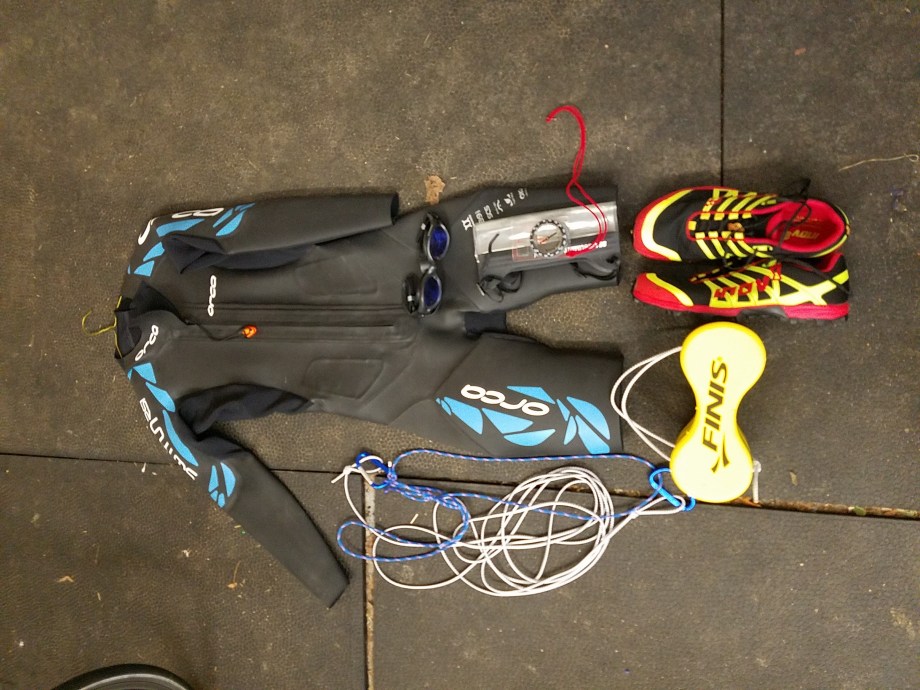
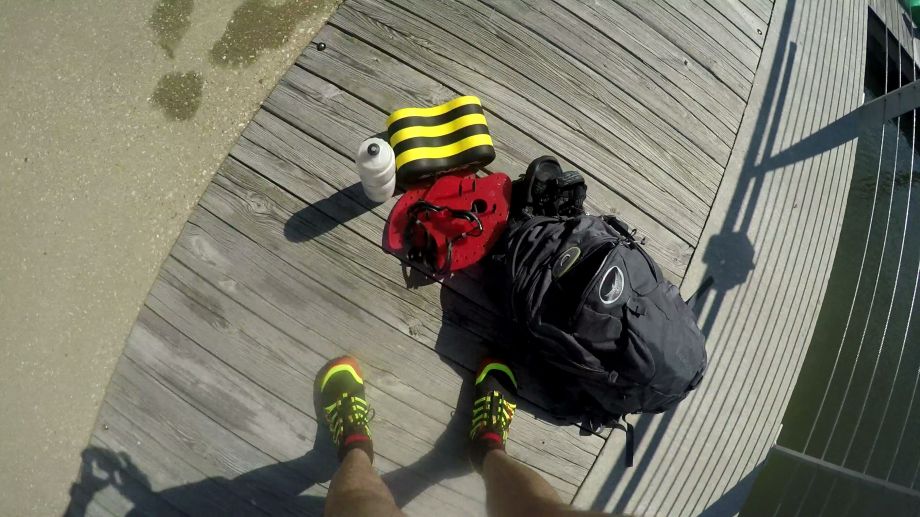
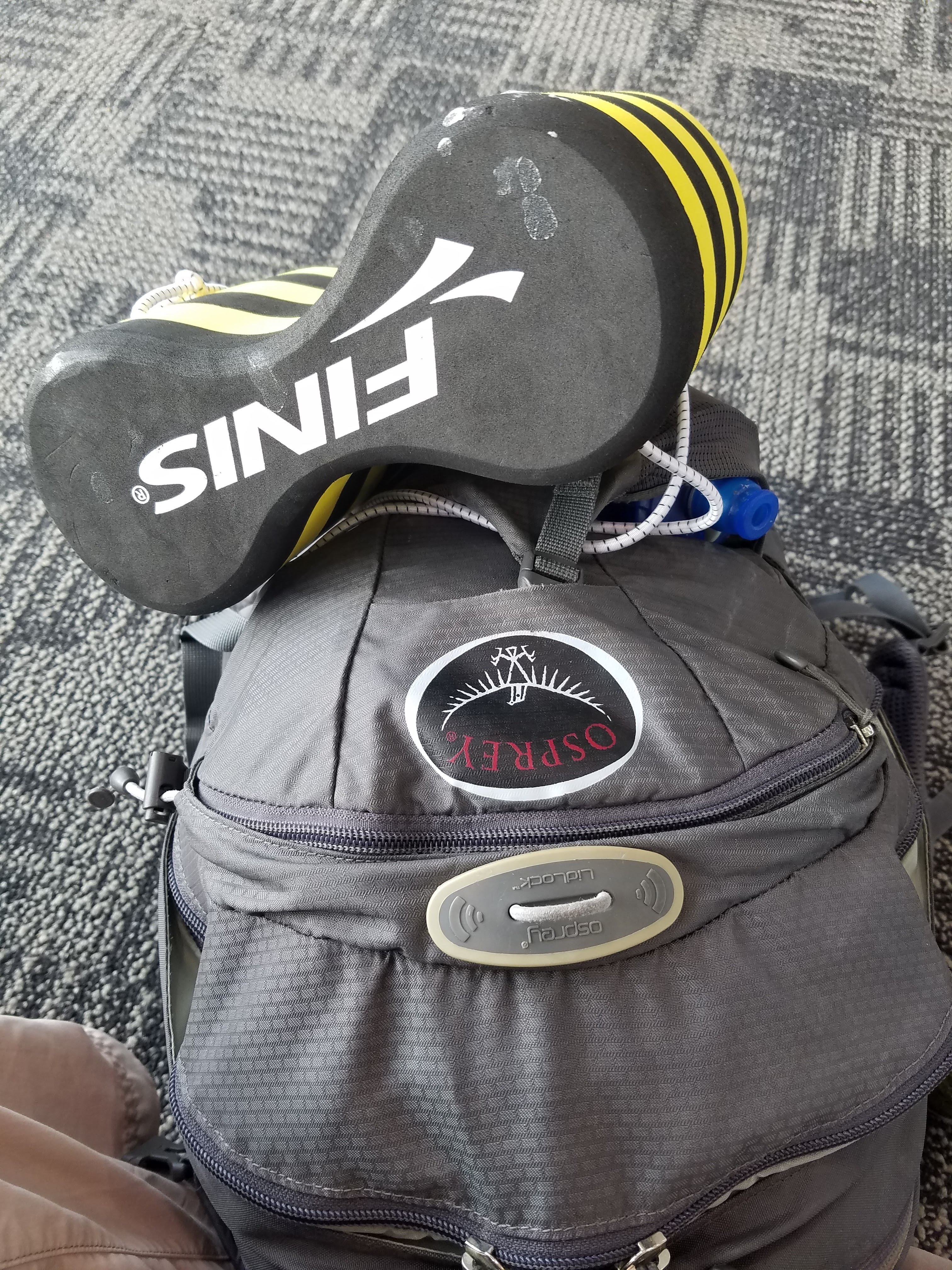
After a little interweb searching I opted to punch holes in my pull buoy and snake it with quarter inch marine bungee cord from Home Depot. I also grabbed 2 carabiners and parachute cord to complete our tether. I’ve got plenty of experience swimming in cold water and in wetsuits, but by the time I got my Orca swimrun specific suit, we were well into the heat of the summer and wetsuit swimming was out. I managed several hour long swims pulling with my paddles and dragging my shoes behind me. The paddles definitely helped overcome the drag of the shoes. And speaking of shoes I went with a set of Inov8 trail shoes and drilled holes in the bottom to help drain water.
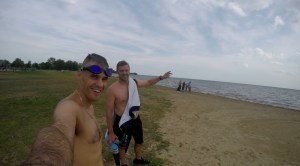
Around July my partner found out work was going to prevent him from taking time off to race in August. Bummed, I desperately searched for a second dude crazy enough to take on this challenge. Again I was met with mostly the same skepticism and oddball comments as I did in January. However, I was able to dangle just enough vague detail, while leaving out anything that might scare him off, to get one person to bite. A fellow OU swimming alum, James, took the bait. I’m convinced had he known what really lay in store for him in just 6 weeks time he might not have consented. But hey, there was lobster and beer promised at the end, so it couldn’t be all bad right? We managed one practice session, mostly to test swimming with the tether and transitioning from swim to run and back. We were a motley pair.
Finally Headed to Maine
The race date was set for 14 Aug. I drove the family to Michigan (we had family vacation plans for afterward), then hopped a flight to Portland, ME.
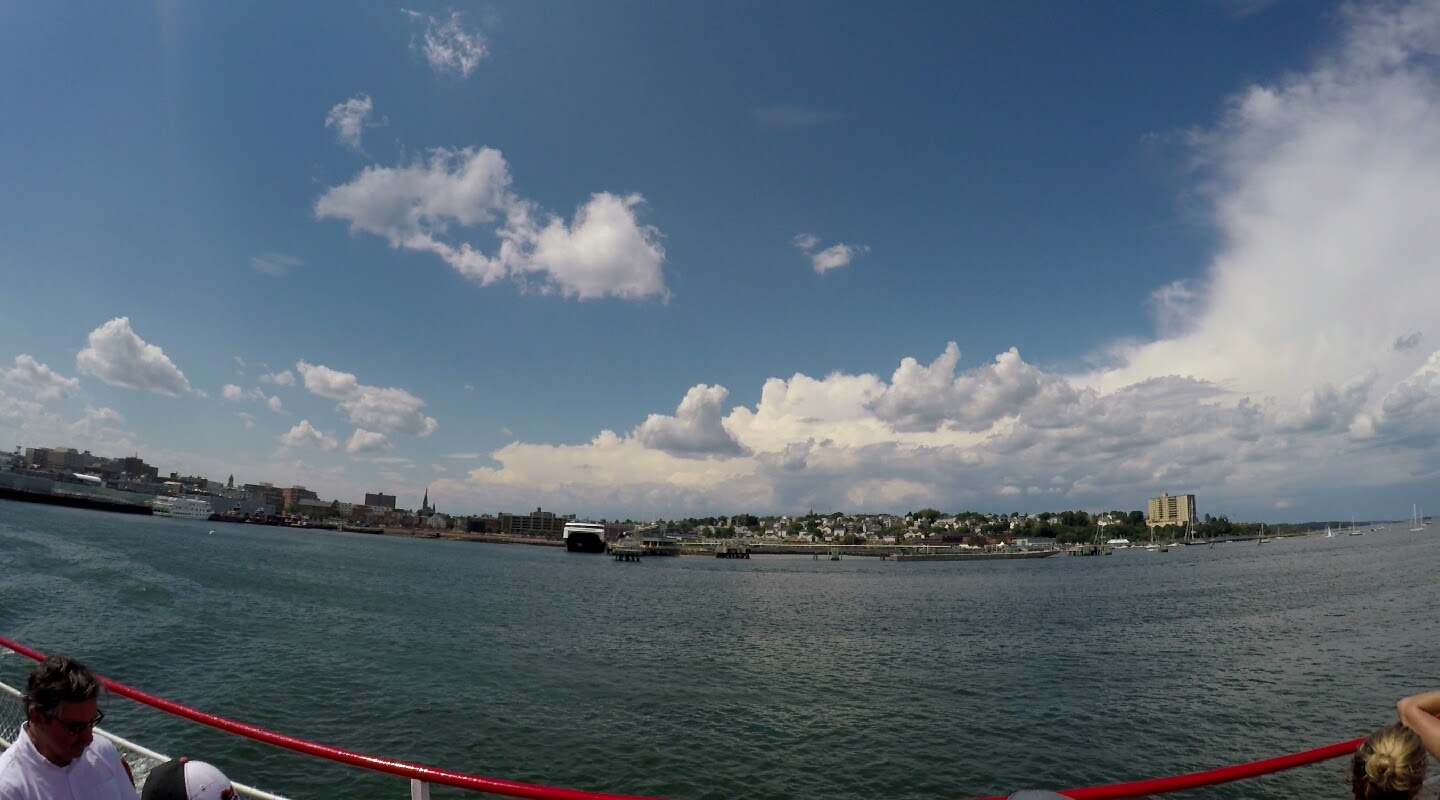
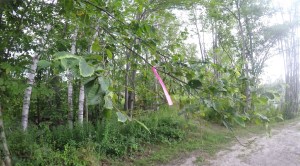
I arrived the Friday before and immediately noticed something was off. It was hot. Really hot. This was supposed to be the Northeast. I expected temps in the 70s not the 90s. I asked the cabbie and he informed me this was the hottest day all summer. Great. We’re supposed to run in wetsuits in 90 degree temps? This should be fun. After checking into the hotel and grabbing a quick lunch I caught the ferry out to Peaks Island for some course recon. I got lost…a lot. I tried to follow the provided maps and the few pink ribbons which were to mark our course. Then it rained. Hard. Well, I was going to be spending some quality time running wet on Sunday, so this was just a warm up.


After my failed attempt at recon, I was pretty sure we were doomed to be chasing our tails, running in circles. But, again, there was beer and lobster at the end, so not all bad. Saturday was race check-in, gear check, and race overview/Q&A with the race directors. Everything was pretty straight forward. My partner in crime arrived straight from the airport just as the Q&A was starting. We quickly ran up and got our gear checked. Required gear consisted of: wetsuit, first aid bandages, compass, jersey, swim cap, maps, whistle, new wave swim buoy, and tether. We were also given a tracking beacon – more on that later. Most of the Q&A centered around the course, how it was marked, currents on the swim crossings to pay attention, and where aid stations were located. I’ll be honest, in the lead up to the event it was hard to follow up-to-date info on such things. Most info seemed to be put out on Facebook instead of the race website. I imagine updating Facebook was easier, but from an athlete’s perspective, it’s hard to follow every post and then find the details listed in comments to comments within posts. An updated FAQ site with one stop shopping would have been easier to follow. However, on Facebook, the updated photos and videos on the course as it developed and changed over the summer were great. And the race directors were very responsive to any questions asked. You could tell they were passionate and enthusiastic about the endeavor. The meeting wrapped up and team #135 aka Team Tri-Ruk headed down to the warf in search of lobster for dinner – when in Maine right?
Race day
Sunday morning arrived early. The alarm was set for 0400, but I was wide awake at 0300. I’d found a diner a couple blocks from the hotel that opened at 0400, so we grabbed out gear and wandered down for pre-race carb-loading and coffee. It was going to be a while before we had solid food again. Stuffed and caffeinated we walked down to the ferry terminal and boarded the boat for the start with 134 other teams.
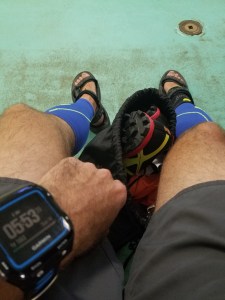
Now back to the tracking beacon. At the race check in we were given a beacon and plastic bag to put it inside our new wave swim buoy. We were instructed not to turn it on until the boat was underway. I took it out, pushed the buttons as instructed and waited for the blue and green lights to blink. They did and I shoved it into the buoy. A few minutes later a women sitting near me asked if the lights were supposed to stay on. Huh, don’t know. I opened the buoy and took it out. No blinking lights. No indication it was on. I pushed them again, they came on, then went out. Other racers’ beacons lights seemed to stay on longer than ours. I went in search of someone to ask. I couldn’t find anyone who seemed to know, so I pushed the buttons one more time, shoved it into the buoy and hoped for the best. We had been given a link to send to friends and family so they could track us in real time. Afterwards, all of my friends who tried the website said the same thing. No one could find team 135, there was no way to filter out racers (i.e. only see men’s teams), and more often then not too many dots were on top of each other to be able to track any single team. I not convinced our beacon was ever on.
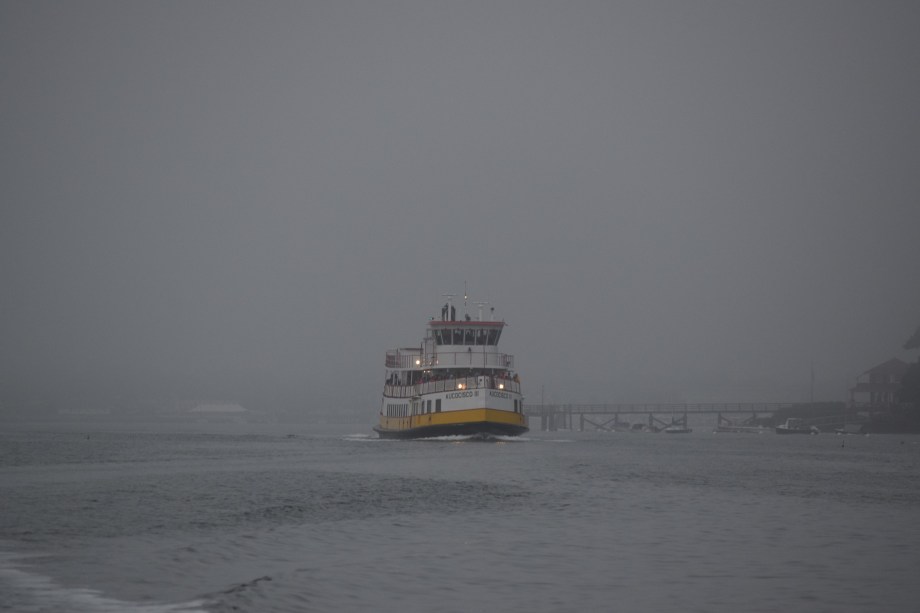
The ferry ride to the ferry drop off on Chebeauge Island took about 45 minutes with one stop at Peaks Island to pick up a couple of racers and volunteers. I messed with the previously mentioned beacon and got my gear ready to go. Wetsuits were donned last so as not to over heat. A thick fog had rolled in and the race directors announced the start would be delayed 30 minutes to allow some of it to burn off.

James and I shuffled into the middle of the pack. I figured there would be a few highly motivated teams who would open the race with an all out sprint for the 1.8 mile road run to the first swim entry. Despite every competitive bone in my body screaming otherwise, we didn’t need to be up front. The collection of 135 anxious pairs of racers mingled about waiting for our cue to begin. Suddenly, without fanfare or warning, a horn sounded and we were off and running. James and I took off at a moderate jog warming up the legs. Before I knew it, a beach came into view and we rapidly approached our first swim leg. Wading into the water we connected the tether to ensure we stayed close donned paddles and plunged in. The first swim was about 700 yards and we pushed hard. Many teams that raced past us on the road soon saw our wake as we made up ground quickly. Our second run leg was a quick grassy trail run led to another 700 yard swim. Again we blew by teams that crushed us on the previous run.


We jumped out at Cleaves Landing on Long Island and took to the pavement for a stretch. I imagine these paved sections are where some teams made huge time games on the rest of the field.


A 940 yard swim to a small sand bar led us to another swim and our first shore scramble around Vail Island. James loved the shore scrambles, nimbly hopping from rock to rock like a little kid playing at the beach. On the other hand, I kept hearing my sister’s voice in my head, “don’t break an ankle! You’ve got an Ironman to race in a month!” I took to the rocks with a little more caution.


A short 450 yard swim took us back to Long Island and a short road run to our longest swim of the day, a 1700 plus yard swim past Pumpkin Nob to Evergreen Landing On Peaks Island. Again we swam as well as anyone, passing several teams who had beaten us to the swim transition. We’d gotten into a rhythm of tethering for the swims. I led and did most of the sighting. I pushed every swim hard. About a 100 yards past Pumpkin Nob James came around and took the lead. As I slipped into his draft, the strain on my body and shoulders almost ceased. Whoa! I’ve been swimming for a long time in the pool and in the open water for triathlons. I’ve drafted plenty of times, but never felt a draft like this. It was almost effortless. As we came out of the water, I asked James if that was what every swim had been like for him. Pretty much he replied. Awesome. Well, since we weren’t making up time on land, we had to do it in the water. James asked how long this next run section was? As I scooped up water and a gel I asked a volunteer what Island we were on. Honestly, I’d forgotten what order the islands were in. When he replied Peaks Island, I knew this was going to be the longest run of the day, about 3.5 miles over a combination of paved roads and thick off road trails. By this point in the day the sun had come out and pushed all the fog out. The temperature started to climb into the 80s. James and I settled into a light jog until we hit the first trail section. This was specifically the section I had tried and failed to recon on Friday. Fortunately, it was extremely well marked and we had no issues navigating the trails.


Coming out of the trail I was roasting. The sun beating down on me in my wetsuit and the effort exerted throughout the long run sent my core temperature sky high. All I wanted to do was get back in the water. I might have been a little to hasty to get back into the soothing coolness of the bay water. I heard a volunteer shout that there was a current about half way across pushing swimmers left. Aim for the large beach and the red barn was all I heard. I took notice of a paddle boarder that seemed to mark the half way point, checked the swimmers to his right already in the water and took off with James on my heals. I was so happy to be back in the water I kept my head down for 4 or 5 minutes just plowing ahead as hard as I could push my paddles. I popped up and took note of a large beach in front of me. Keeping the volunteer’s advice in mind I aimed right and plowed forward. A couple minutes later a red kayak came up on my left. the dude in the boat just sat and stared at us. I swam on. After a few more minutes I heard him shout at us. I stopped and popped my head up. He pointed to my right with his paddle and shouted, “the exit is over there.” I turned my head. Oh snap. I had gotten us caught in the current and we were about 300 yards off course. Seriously dude, you couldn’t have said something a few minutes ago? Nothing I could do but change course and push forward into the current that had dragged us off course. By the time I hit the boat ramp, I was done with paddles and swimming, and we still had two more swims to go. We slowly made our way across Cushing Island down to Little Beach and an 800 yard swim to Fort Scammel. On Saturday the race directors had said that teams had the option of getting out near the navigational beacon and doing the shore scramble or swimming to the original exit point. James and I hit the navigation aid and jumped out. Several volunteers in a boat were shouting at us, but we couldn’t hear them. We started scrambling with a couple of other teams over some pretty treacherous rocks. Once over the side, we could see that the exit and start of the scramble the race directors had been talking about was a little further forward. Oh well, we were out now and it would have been worse to get back in the water. We hit the beach and back tracked up a trail through the old World War II fort.


This led us down to our last swim of the day, a 680 yard swim back to Peaks Island and the finish line. James jumped in first and led the way toward the last beach. I didn’t argue, welcoming the chance to relax in the draft. Coming out of the water for the last time we ran up timber steps through a grassy trail to the finish line.


Out of 135 teams we finished 50th and the 21st male team. We made every cutoff and finished with a final time of 4:42. I think overall on the day, we swam as well or better than any team out there. No one ever passed us in the water. We finished wet, tired, hungry and thirsty. It’s a good thing the post race lobstah bake was phenomenal with craft beer to wash it down!


Looking Back
Most of my gripes are really minor, and might be considered nit picking. None of them are show stoppers for me, and I would absolutely recommend the race to anyone with a strong swimming and endurance background. For a first run event, this was a top notch race. (*None of these are in any particular order.)
I was concerned early on that the course wouldn’t be well marked and that serious orienteering skills would be required. Especially being forced to carry a compass. My failed attempt at recon on Friday with maps in hand didn’t do anything to relieve that fear. However on race day, an army of volunteers kept us on course and safe on land and in the water. The pink ribbons were everywhere, and you could always see the next one from the last one. Had the fog not burned off, I could see where getting a solid bearing to the next point before entering a swim would be helpful, but this ended up not being required.
The day after the race I woke up not able to move my neck side to side. This is probably due to all the sighting during the swimming. The pain lasted 2-3 days after the race. I had a little chaffing on my neck from my wetsuit, but not nearly as much as James had. He even had a strip of KT tape wrapped around his neck. My legs felt fine despite the almost 11 miles they traveled over land. No shoulder pain from the paddles. Long open water swims over the summer helped strengthen my shoulders.
Teamwork is key. That’s one of the things that makes this race so specially. Communication with your partner is a must. One the first run I noticed one woman running with her partner nowhere in sight. You’re only as strong as your weakest link and it takes two to work your way through this race. You can’t put your head down and just grind away in your own little world like a normal triathlon or road race.
I think that the swim entry times might have been too easy. With this much open water swimming, simply surviving a 1.2 or even 2.4 mi swim isn’t good enough. Be warned, if you’re just an average swimmer who dreads the first leg of the triathlon, you could be in for a rough day at swimrun.
As previously covered, I am not sure our beacon ever worked. I fully accept that this could have been operator error, but there were only two buttons to press.
I wasn’t a fan of having to carry the New Wave Swim buoy. It wasn’t previously announced that this was required race gear. Some teams carried them like footballs. I hate running with anything in my hands. I opted to snap the buoy around the belt so I didn’t have to hold onto anything, but it flopped around annoyingly behind me. I think the product is a great piece of gear to have if you’re headed out on an open water swim on your own without any safety boats or observers to make yourself visible to boating traffic. I understand and can hardly argue with the safety aspect of using the buoys, but it seemed to be an unnecessary piece of gear to schlep around for a race with all of the safety boats, kayaks and volunteers on the water.
Overall, James and I had a fantastic time. I truly appreciate the race directors bringing this unique race format to the USA. I’m excited to see two additional races coming up in North Carolina and Virginia in October. Thank you to all the volunteers who made the race possible. Without you, we truly would have been lost out there. Another huge thank you to the locals who opened their homes to us and allowed us to experience their little slice of island paradise in Casco Bay.


Wow! You’re a special kind of someone. You chose your pain wisely. Good stuff.
Les